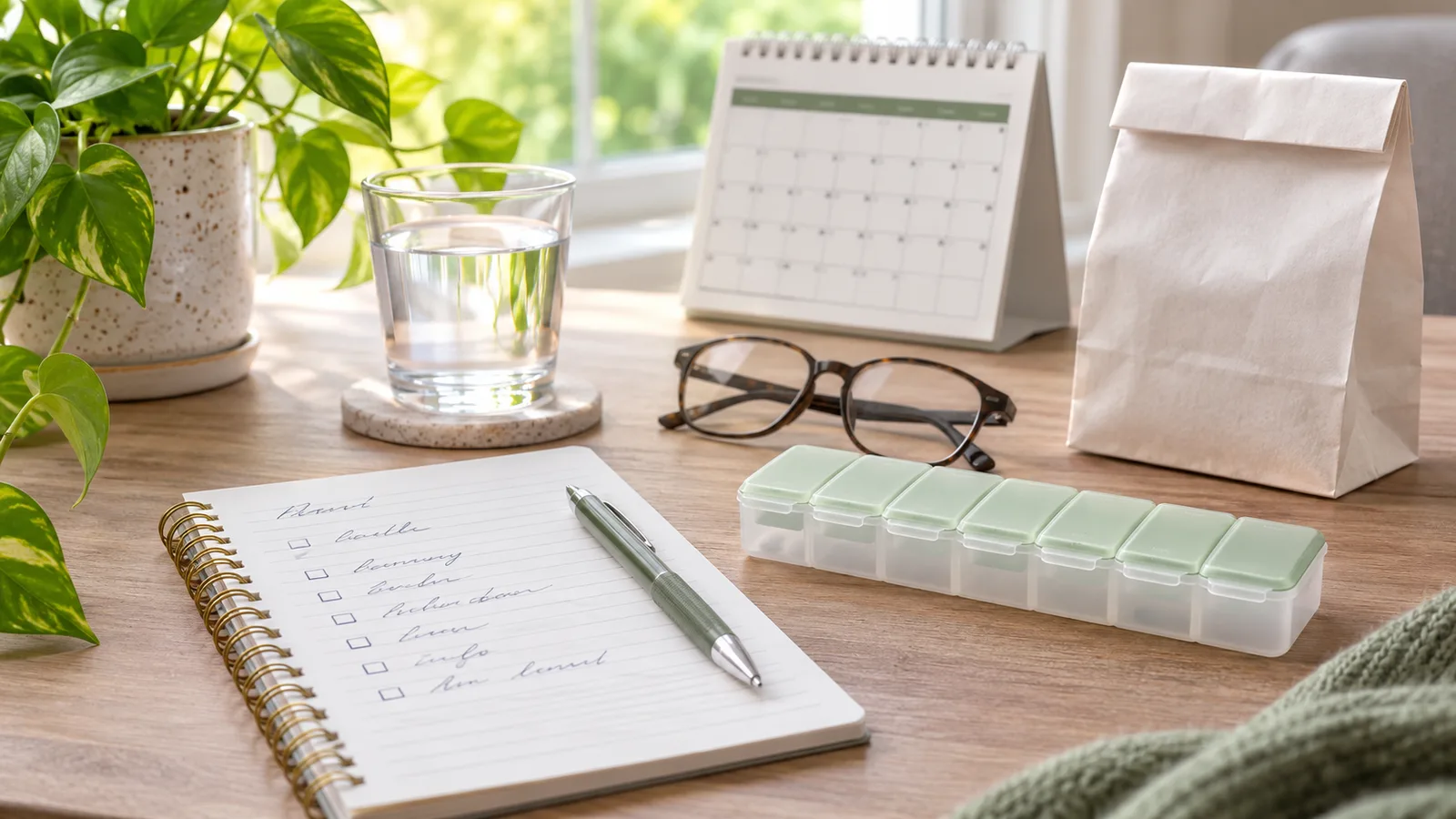
A medication list is useful only when it is accurate, easy to find, and simple to update. The U.S. Food and Drug Administration recommends including prescription medicines, over-the-counter drugs, vitamins, and supplements in one record.
Choose one main list
Use paper, a notes app, spreadsheet, or health-provider form. The format matters less than having one authoritative version. If you keep paper and digital copies, choose which is the master.
Record the details professionals need
- Brand and generic name, if known
- Strength shown on the label
- The amount and times you actually take it
- The reason it is used and who prescribed it
- Dates started and stopped
Also list allergies, serious past reactions, emergency contacts, and the preferred pharmacy. Include medicines used only occasionally and mark them as needed.
Include nonprescription products
Pain relievers, cold medicines, sleep aids, vitamins, herbal products, and supplements belong on the same list because they matter when professionals check for duplication, side effects, or interactions.
Update at a trigger point
Update the list whenever there is a new prescription, dose change, discontinued medicine, new allergy, or hospital visit. Bring the list and containers to a pharmacist or clinician when a full review is needed. Never change a dose because records look inconsistent.
Carry a copy with an insurance card or save an offline version on the phone. A short maintained list is safer than a detailed document that is rarely updated.